When the World Shatters: Healing After Sudden Loss in NYC
Sudden loss can feel like time freezing while the rest of the world continues to move. When a death is unexpected, it does not only bring sadness—it disrupts your sense of reality. In my West 13th Street practice, I move beyond standard "stages of grief" to provide a
specialized, relational therapy
for those facing the terrible shock of traumatic bereavement.
The Experience of "Shattered Reality"
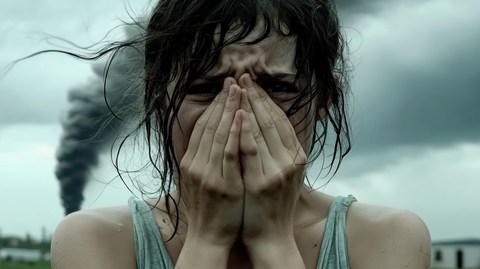
We all live with quiet assumptions—the belief that the people we love will return home, or that life will continue in familiar rhythms. When those assumptions are broken by sudden death, it can create a profound psychological rupture.
You may feel like a "ghost" in your own life, unable to relate to the ordinary world around you. This sense of disconnection is often part of
complicated grief and depression
as well as
traumatic grief
.
When the "Glue" of Your Life Is Gone
For many, a partner or loved one functions as an emotional anchor. When that person is suddenly gone, it can feel as if your internal structure is collapsing. This is often experienced as a fragmentation of the self.
You are not only mourning a person—you are also mourning the version of yourself that existed in relation to them. The
emotional fatigue can be overwhelming
.
A Collaborative Way Forward
I do not aim to "fix" grief or push you toward "moving on." Instead, the work focuses on two essential movements:
1. Creating a "Relational Home" for Your Pain
Grief becomes traumatic when it has nowhere to be held. In the therapy space, we create a "relational home"—a place where even the most painful emotions can be spoken and received without judgment. Over time, what feels unbearable becomes something that can be carried with support.
2. Rebuilding Your Internal Structure
When the person who provided emotional stability is gone,
 you may feel depleted or unmoored. My role is to offer a steady psychological framework during this period of disruption. Gradually, through consistent work, you begin to rebuild an internal capacity to hold both memory and forward movement.
From Annihilation to Integration
Healing from sudden loss does not mean "getting over it" or returning to a previous version of normal. It means reaching a point where grief is no longer experienced as a tidal wave, but as something integrated into the landscape of your life.
You carry the person with you, but they are no longer the source of internal collapse.
- Grief is not a disorder: It is a human response to a world that has fundamentally changed.
- Healing is collaborative: We work together to help stabilize and reintegrate a disrupted identity.
- The goal is integration: To live in a way that honors the loss without being overwhelmed by it.